

What to Eat Before a Half Marathon
A practical race-morning breakfast plan with carbohydrate targets, timing options and stomach-friendly examples.
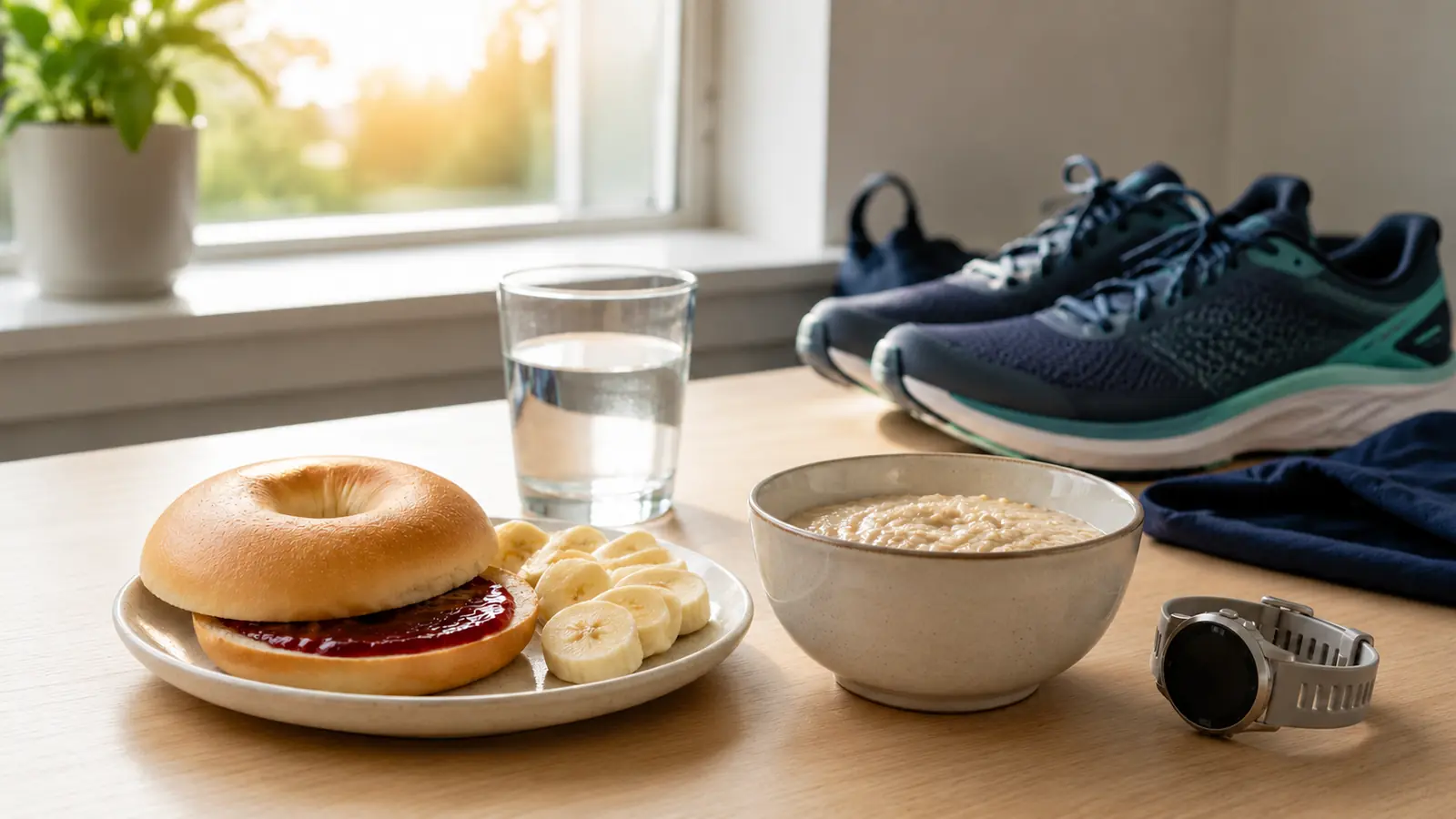
The short answer: eat a familiar, carbohydrate-rich breakfast about two to four hours before your half marathon. A practical starting target is roughly 1–2 g of carbohydrate per kg of body mass when eating two to three hours before the start, using foods that are relatively low in fat and, if your stomach is sensitive, low in fibre. For a 70 kg runner, that might be 70–120 g of carbohydrate from a bagel with jam, a banana and a small bowl of oats. Drink normally, stop chasing clear urine, and test the exact meal before long or race-specific runs.
Your final pre-race meal should make the start line feel ordinary. It is not the time to eat as much as possible, eliminate every food group or copy an elite runner’s breakfast. The goal is simpler: top up liver glycogen after the overnight fast, arrive comfortable rather than hungry, and avoid a meal that is still sitting heavily when the gun goes.
Sports nutrition guidance allows a wide range—commonly 1–4 g of carbohydrate per kg in the one to four hours before prolonged exercise—because the right amount depends on timing, body size, usual diet, appetite and gastrointestinal tolerance. A runner eating four hours before the race can generally handle more than someone eating 75 minutes before it. This guide turns that broad recommendation into a conservative, usable plan.
When Should You Eat Before a Half Marathon?
For most runners, two to four hours before the start is the most practical window for a full breakfast. That gives time for digestion while leaving the meal close enough to support the race. The exact timing is personal: some runners feel best after three hours, while others are comfortable with a smaller meal 90 minutes before running.
| Time before start | Best approach | Practical carbohydrate target | Example |
|---|---|---|---|
| 3–4 hours | Normal-sized, familiar breakfast | About 1.5–3 g/kg if well practised | Oats, banana, honey, toast or bagel, water |
| 2–3 hours | Moderate breakfast, easy to digest | About 1–2 g/kg | Bagel with jam, banana, small oats or cereal |
| 60–90 minutes | Small snack or liquid option | About 0.5–1 g/kg | Banana, toast with jam, sports drink or tested smoothie |
| 15–30 minutes | Optional carbohydrate top-up | 15–30 g, counted in the race plan | Tested gel, chews or sports drink with appropriate water |
The ranges overlap intentionally. A 55 kg runner who dislikes early food and a 90 kg runner with a large habitual breakfast should not be forced into identical meals. Start from what has worked before demanding long runs, then adjust one variable at a time.
If your race starts very early, you have three reasonable options: wake earlier and eat the tested full meal; use a smaller breakfast closer to the start; or eat a substantial carbohydrate-rich supper, then use a light morning top-up. Do not sacrifice the entire night’s sleep merely to satisfy a theoretical maximum intake.
How Much Carbohydrate Should You Eat?
The widely cited 1–4 g/kg recommendation is a flexible framework for exercise lasting more than about an hour, not a requirement to force four grams per kilogram into breakfast. At the upper end, a 70 kg runner would eat 280 g of carbohydrate—far more than many recreational runners can comfortably digest on race morning. For a half marathon, a tested 1–2 g/kg meal two to three hours before the start is a more realistic starting point for many people.
| Body mass | 1 g/kg | 1.5 g/kg | 2 g/kg |
|---|---|---|---|
| 50 kg / 110 lb | 50 g | 75 g | 100 g |
| 60 kg / 132 lb | 60 g | 90 g | 120 g |
| 70 kg / 154 lb | 70 g | 105 g | 140 g |
| 80 kg / 176 lb | 80 g | 120 g | 160 g |
| 90 kg / 198 lb | 90 g | 135 g | 180 g |
These numbers help you see the scale of a meal. They are not medical prescriptions, calorie targets or reasons to weigh every bite. Food labels also vary, so use the packet information for your actual products.
A 70 kg worked example
A plain bagel may provide about 45–50 g of carbohydrate, a medium banana roughly 25 g, two tablespoons of jam around 25–30 g, and a small serving of oats 25–35 g. Together, that is approximately 120–140 g—close to 1.7–2 g/kg for a 70 kg runner. Exact values depend on product and serving size.
If that feels too large in training, reduce it. A smaller meal you digest well is more useful than hitting a formula and starting with nausea.
Six Practical Pre-Half-Marathon Breakfasts
Choose one structure and repeat it during training. Use white or lower-fibre versions if you are prone to urgency, bloating or cramps. If whole grains, dairy or nut butter are normal and comfortable for you, they do not need to be banned.
| Breakfast | Approx. carbohydrate | Best for | Adjustment |
|---|---|---|---|
| Bagel + jam + banana | 90–110 g | Simple, portable race mornings | Add sports drink or a second bread item if tested |
| Oats + banana + honey | 75–105 g | Runners who tolerate oats well | Use a smaller oats portion and more honey for less fibre |
| Rice pudding + banana + toast | 90–125 g | Low-fibre, soft-food preference | Use a familiar dairy or non-dairy version |
| Low-fibre cereal + milk + toast and jam | 80–120 g | Hotel or family breakfast | Choose lactose-free milk if that is your normal routine |
| White rice + egg + banana | 75–110 g | Runners who prefer savoury food | Keep added oil and rich sauces modest |
| Tested liquid meal + banana | 60–100 g | Low appetite or very early start | Avoid unfamiliar high-fibre smoothies |
Small amounts of protein are fine and may help the meal feel familiar, but protein is not the main acute fuel target. Large amounts of fat, fibre and protein tend to slow digestion or increase fullness, which is why a generous fried breakfast, rich pastry or unusually large nut-butter serving is a risky last-minute choice.
There is no clear performance advantage to obsessing over the glycaemic index of the meal. A systematic review found no consistent endurance benefit from choosing a low- rather than high-glycaemic pre-exercise meal. Tolerance, adequate carbohydrate and a practised routine matter more.
What Should You Eat the Day Before?
A half marathon does not require a heroic pasta feast. Eat regular carbohydrate-containing meals, especially if your race is likely to take longer than 90 minutes: rice, pasta, bread, potatoes, cereal, fruit and familiar snacks can all contribute. Keep the evening meal normal in size and finish early enough to sleep comfortably.
Runners with sensitive stomachs may reduce unusually fibrous, spicy or very fatty foods during the final 12–24 hours. That is a short-term comfort strategy, not a recommendation to make the everyday diet low in fibre. Do not attempt a new restrictive protocol, aggressive low-FODMAP diet or dehydration strategy without an appropriate professional.
Your two-week half marathon taper should lower training fatigue without turning race week into a food experiment. Normal, adequate intake supports recovery; trying to become lighter in the final days is more likely to compromise fueling than improve performance.
Build a training week that survives real life
Get the free Race-Ready Week printable template and editable planner. Prioritize the sessions that matter, protect recovery and prepare a fallback before work or travel changes the plan.
What Should You Drink Before the Race?
Start race morning normally hydrated using a rehearsed half marathon hydration plan. Drink with breakfast and sip according to thirst, weather and your practised routine. Pale straw-coloured urine is a more useful general sign than trying to make it completely clear. Repeatedly forcing large volumes can increase bathroom stops and, in extreme cases, contribute to dangerous low blood sodium.
Hot or humid conditions may require more attention, but “more” is not an automatic answer. Fluid needs vary widely with body size, sweat rate, pace, heat acclimation and the water available on course. The goal is to avoid beginning thirsty or obviously dehydrated without arriving overfilled.
Should you use electrolytes?
A familiar electrolyte drink can be useful in heat, for salty sweaters or when it helps you drink a sensible volume. It does not replace carbohydrate unless the label provides carbohydrate, and it does not guarantee protection from cramps. Count any carbohydrate drink in the same plan as breakfast, gels and chews.
What about coffee?
Keep your normal tested amount. Caffeine can improve endurance performance, but a bigger race-day dose may trigger jitters, urgency, anxiety or a rapid heart rate. Count caffeine from coffee, gels and sports drinks together. If you do not normally use it before hard runs, race morning is not the place to start.
Should You Take a Gel Before the Start?
A tested gel 5–15 minutes before the gun can bridge a long gap after breakfast or simplify the first part of the race. It counts toward total carbohydrate and may require water, depending on the product. It should not replace breakfast merely because it is convenient.
Then coordinate the rest of the race with your likely duration. The guide to when to take gels during a half marathon provides timelines for different finish times. You can also enter expected duration, conditions and body mass into the race fueling calculator to build a practical carbohydrate, fluid and sodium starting plan.
How to Rehearse Your Race Breakfast
Use two or three selected long runs or race-specific sessions. The run does not need to be 21.1 km; it needs to be long and purposeful enough to reveal hunger, fullness, bathroom urgency and whether the timing works.
- Copy the start time. If the race begins at 7:00, rehearse an early breakfast at least once.
- Use the exact products. Bagel size, milk type, gel concentration and coffee strength all matter.
- Record the timing and rough carbohydrate. Avoid changing five variables after one imperfect run.
- Run the planned effort. Easy jogging may not reveal the gut response that appears near half-marathon intensity.
- Review the full morning. Sleep, nerves, heat and travel can affect tolerance as much as one ingredient.
Place rehearsals inside normal training rather than adding extra “test races.” The half marathon training paces guide explains how race pace differs from threshold and easy running. Use the running pace calculator to convert your target finish into exact kilometre and mile pace before the session.
What If You Have a Sensitive Stomach?
Running places genuine stress on the gastrointestinal system, and heat can make symptoms worse. The solution is not automatically to fast. Start with a smaller, lower-fibre and lower-fat version of a familiar meal, allow more digestion time, and practise intake repeatedly.
- Choose white bread, bagels, rice, lower-fibre cereal or smooth oats instead of a large bran-rich meal.
- Reduce very fatty additions such as large amounts of butter, cream or nut butter.
- Use lactose-free products if lactose is a known problem—do not diagnose an intolerance from one difficult race.
- Avoid sugar alcohols and unfamiliar sweeteners if they have caused symptoms before.
- Keep coffee and caffeine at the dose used successfully in training.
- Start the race under control; aggressive pacing can make gut comfort worse.
Persistent pain, blood in stool, repeated vomiting, unexplained weight loss or symptoms outside exercise deserve medical assessment. They should not be managed only by removing more foods.
Race-Morning Timelines
Example: 8:00 start, comfortable early eater
- 4:45–5:00: wake and begin normal fluids.
- 5:15: tested bagel, jam, banana and small oats; coffee only if habitual.
- 6:45: small sips as needed; bathroom and travel complete.
- 7:45: optional tested gel with water if included in the plan.
- 8:00: start conservatively.
Example: 7:00 start, low appetite
- 4:45: wake and drink normally.
- 5:00: banana, toast with jam and a familiar carbohydrate drink.
- 6:20: small tested top-up if hungry.
- 6:50: optional gel only if rehearsed.
Example: 10:30 start
- 6:30–7:00: normal carbohydrate-rich breakfast.
- 9:00: banana, toast or small sports drink if needed.
- 10:15: optional pre-start carbohydrate dose according to the race plan.
Turn the meal into a complete race plan
The €19 12-Week Half Marathon PB Plan includes English and French guides plus an editable workbook, with training structure, pacing, taper and race-day execution in one practical package.
See the complete 12-week planCommon Pre-Race Nutrition Mistakes
- Eating an enormous dinner and calling it carbohydrate loading.
- Copying the 4 g/kg maximum without considering timing or tolerance.
- Choosing high-fibre “healthy” foods that are not part of the usual pre-run routine.
- Skipping breakfast to avoid stomach trouble without testing a smaller alternative.
- Adding coffee, a caffeinated gel and energy drink without counting the total caffeine.
- Forcing litres of water because urine is not completely clear.
- Changing breakfast after collecting the race bib or seeing a social-media recommendation.
- Starting too fast and blaming every later symptom on the meal.
Frequently Asked Questions
Is a banana enough before a half marathon?
Usually not as the only breakfast for a race lasting 90 minutes or more, although it can be part of a small meal. A banana provides roughly 20–30 g of carbohydrate. Add familiar bread, cereal, oats, rice or a carbohydrate drink as your timing and tolerance allow.
Should I eat protein before a half marathon?
A modest amount is fine if habitual, but carbohydrate is the priority. Large protein-heavy meals can displace carbohydrate and may feel heavy. Keep eggs, yogurt or milk portions familiar rather than turning breakfast into a high-protein challenge.
Can I run a half marathon fasted?
You can physically complete a half marathon fasted, but that does not make it the best performance strategy. Research reviews generally find a benefit from pre-exercise carbohydrate for longer endurance exercise. If medical, religious or personal circumstances affect eating, adjust the plan with appropriate professional guidance.
Are oats good before a half marathon?
Yes, if you tolerate them. They provide carbohydrate but can be relatively filling and fibrous. Use the portion, preparation and toppings that worked before long runs; switch to a lower-fibre option only if there is a demonstrated need.
What should I eat if the race is abroad?
Bring shelf-stable components such as a familiar cereal, bagel alternative, jam portions or drink mix when practical. Check whether the hotel breakfast opens early and avoid depending on an unfamiliar buffet. Food transport rules vary by destination, so verify them before travelling.
How does breakfast change for a sub-two-hour goal?
The food target depends more on body mass, timing and tolerance than on the round finish goal. Once fueled, use the exact pacing guidance in how to run a sub-two-hour half marathon and avoid spending the breakfast benefit with an aggressive opening.
Sources and Further Reading
- Burke et al.: Carbohydrates for training and competition.
- Academy of Nutrition and Dietetics, Dietitians of Canada and ACSM: Nutrition and Athletic Performance.
- Rothschild et al.: What Should I Eat before Exercise?.
- Burdon et al.: Pre-exercise meal glycaemic index and endurance performance.
- Costa et al.: Exercise-induced gastrointestinal syndrome.
- World Athletics consensus statement: Nutrition for Athletics.
Editorial disclosure: Vincent Meheut is an experienced endurance athlete and the editor of Endurance Unpacked. He is not a certified coach, registered dietitian or medical professional. This article provides general education, not personalised nutrition or medical advice.